
Hidetaka Kuniyoshi, a JSPS Overseas Research Fellow at Northumbria University in the United Kingdom, has been awarded the 2025 International Astronomical Union (IAU) PhD Prize in the Sun and Heliosphere Division. This prize is awarded to one PhD student in each division by the International Astronomical Union to select the most remarkable work on astronomical research carried out in the previous year. Kuniyoshi received the award for his doctoral dissertation, “The Role of Swirls in Solar Coronal Heating,” through which he obtained his PhD from the Graduate School of Science, The University of Tokyo, in 2025. (August 5, 2026 News Release)
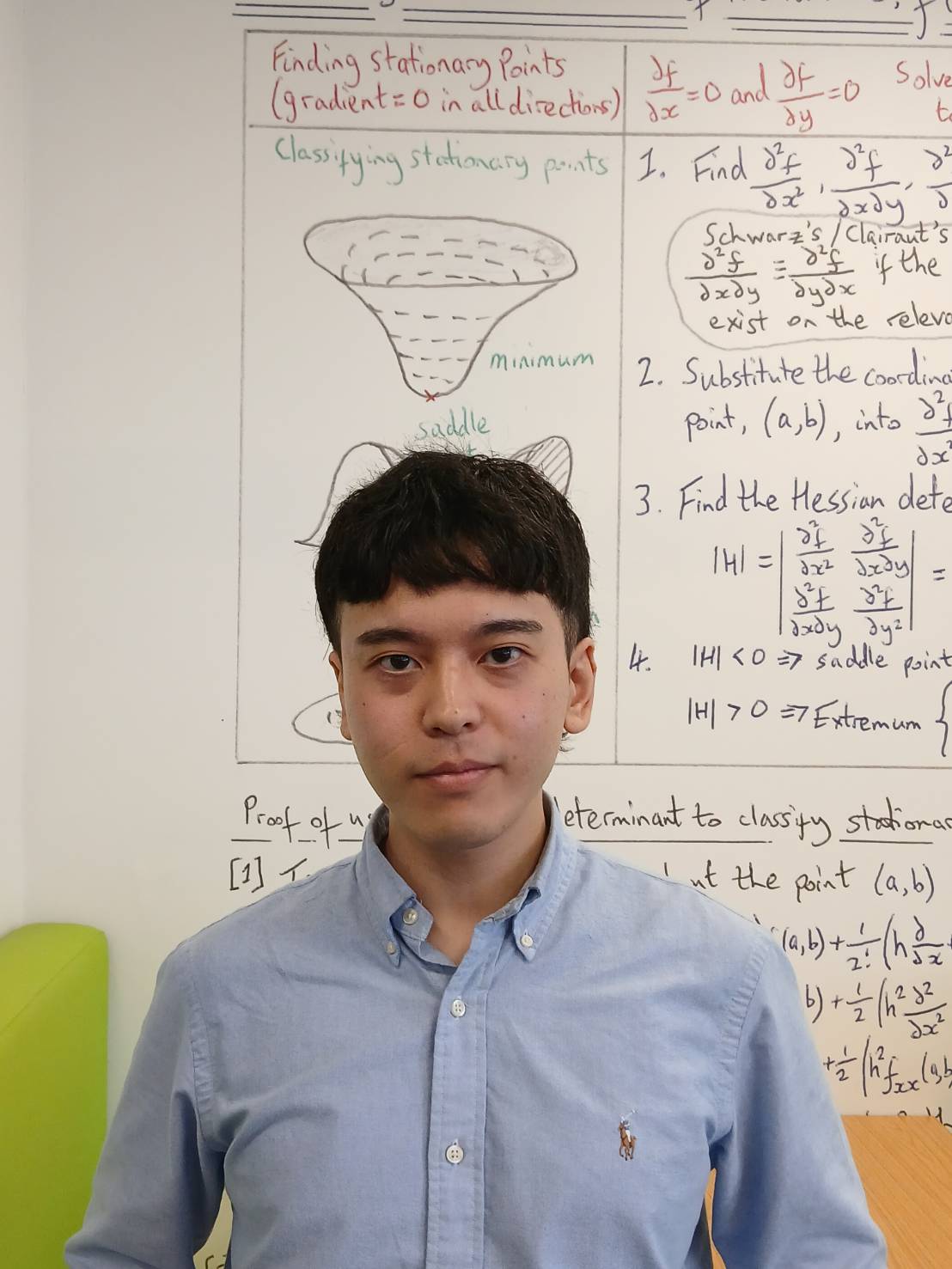
Kuniyoshi seeks to uncover the heating mechanism of the corona, the million-degree outer atmosphere surrounding the Sun or low-mass stars, through large-scale numerical simulations carried out on supercomputers. The corona is a major source of ultraviolet and X-ray radiation that may affect the conditions for life on surrounding planets, yet scientists still do not fully understand how it is heated, even in the case of the Sun, which can be observed in the greatest detail.
In his doctoral research, Kuniyoshi performed state-of-the-art numerical simulations using the supercomputers ATERUI II and ATERUI III, achieving unprecedented scale and resolution. These simulations demonstrated that small-scale vortices on the solar surface twist magnetic fields and generate “magnetic tornadoes,” which transport magnetic energy into the corona. Furthermore, he showed that this energy triggers tiny explosive events known as nanoflares, which are considered a key signature of coronal heating. Analysis of hundreds of simulated events revealed results that agree closely with observations.
These findings provide a new physical framework explaining how magnetic activity at the solar surface heats the corona to extremely high temperatures. The results are expected to contribute to a deeper understanding of the high-energy radiation and energetic particles emitted by the Sun and other stars.
Kuniyoshi comments, “This research would not have been possible without the guidance of my supervisors, the collaboration of my co-authors and fellow researchers, and the extensive computing resources provided by CfCA. The solar corona is a fundamental subject in space plasma physics, and further advances are expected with the next generation of observational facilities. Going forward, I hope to apply the insights and expertise I have developed in solar physics to a wide range of interdisciplinary research.”
About the Supercomputers Used in This Research

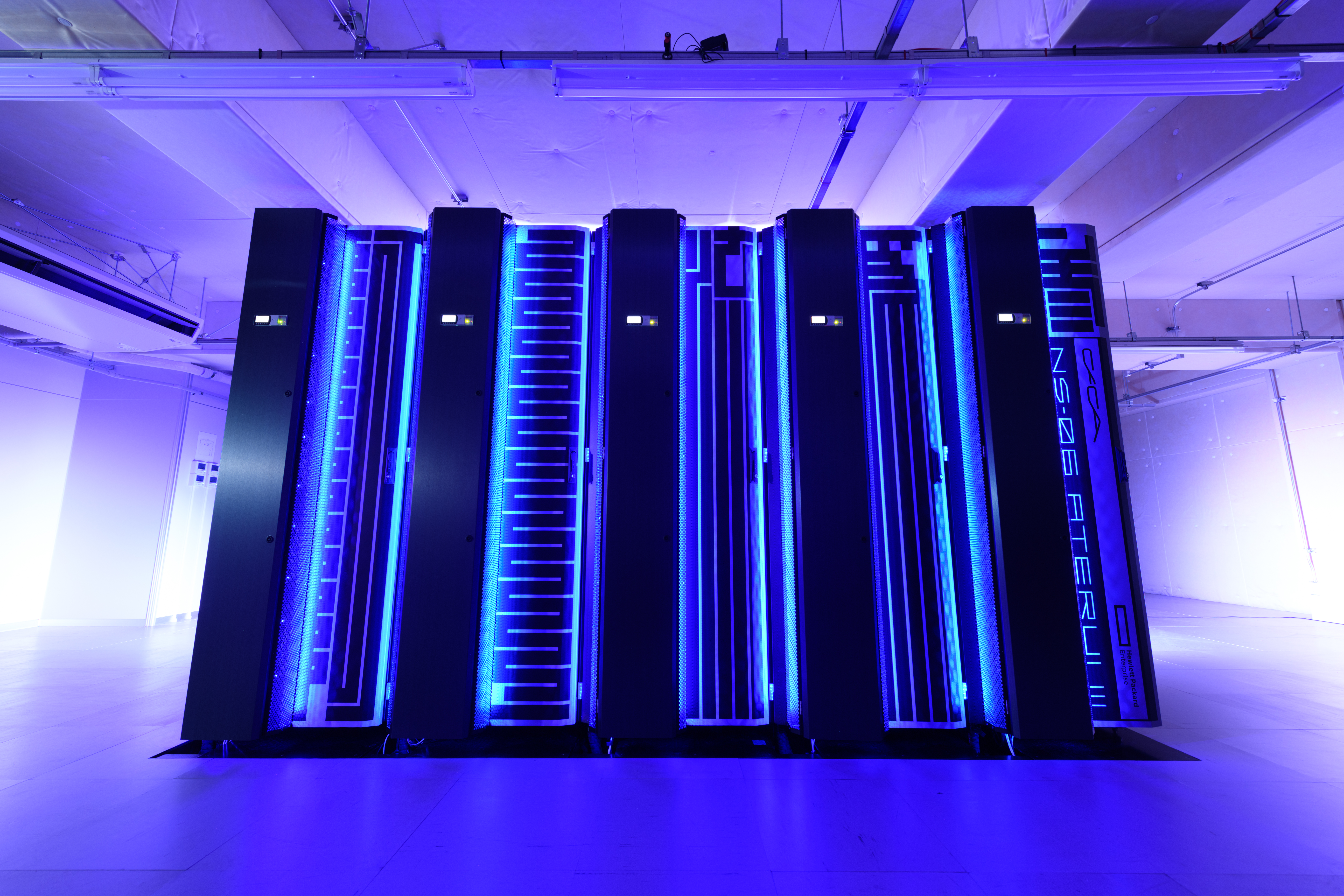
Kuniyoshi's work made use of the National Astronomical Observatory of Japan's astronomy-dedicated supercomputers ATERUI II and ATERUI III. ATERUI II (Cray XC50) delivered a theoretical peak performance of 3.087 petaflops and was operated until August 2024. Its successor, ATERUI III (HPE Cray XD2000), began operation in December 2024. ATERUI III consists of two systems: System M, optimized for high memory bandwidth, and System P, optimized for large memory capacity, with a combined theoretical peak performance of 1.99 petaflops. (Image Credit: NAOJ)
Related Link
- International Astronomical Union: 2025 IAU PhD Prize Winners Announced